Autoimmune Disease Treatment Platform Technology
Type 1 Diabetes (T1D)
Inflammatory Bowel Disease (IBD)
Inflammatory Bowel Disease (IBD)
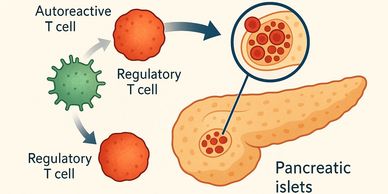
In Type 1 diabetes, autoreactive T cells attack and destroy the insulin-producing β-cells of the pancreas. This autoimmune process occurs because regulatory T cells (Tregs)—which normally prevent self-reactivity—have defective IL-2 receptor signaling due to issues with their IL-2 receptor (IL-2R) signaling pathways, leading to a failure in maintaining immune tolerance.
TRegRx’s proprietary protein-drug conjugate (PDC) technology directly addresses this IL-2 receptor signaling defect, stabilizing key intracellular mediators (JAK1, JAK3, and STAT5) to restore normal Treg function.
By re-establishing proper IL-2R communication, TRegRx’s therapy helps protect the pancreatic β-cells from immune attack, effectively addressing the root cause of Type 1 diabetes rather than merely managing its symptoms.
Inflammatory Bowel Disease (IBD)
Inflammatory Bowel Disease (IBD)
Inflammatory Bowel Disease (IBD)

In Crohn’s disease and ulcerative colitis, chronic intestinal inflammation occurs when regulatory T cells (Tregs) lose their ability to suppress immune overactivation in the gut. This dysfunction is associated with a defect in IL-2 receptor signaling, which disrupts Treg stability and mucosal immune tolerance. TRegRx’s innovative protein-drug conjugate (PDC) technology addresses this issue by repairing the defective IL-2R signaling, thereby restoring JAK-STAT5 pathway activity and normal Treg function. By re-establishing Treg-mediated immune balance, TRegRx’s approach effectively helps reduce intestinal inflammation and restore mucosal homeostasis—without broad immunosuppression.
Multiple Sclerosis (MS)
Inflammatory Bowel Disease (IBD)
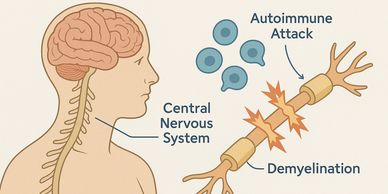
In multiple sclerosis, autoreactive immune cells target the myelin sheath that protects nerve fibers in the brain and spinal cord. This damaging process occurs when regulatory T cells (Tregs)—which typically suppress autoimmune inflammation—lose stability due to a defect in IL-2 receptor signaling. TRegRx’s innovative protein-drug conjugate (PDC) platform effectively repairs IL-2 receptor signaling in Tregs, restoring JAK-STAT5 activation and reestablishing immune regulation. By correcting this signaling defect, TRegRx’s therapy not only helps reduce neuroinflammation but also preserves neural integrity, addressing the disease at its immunologic source.
Systemic Lupus Erythematosus (SLE)

In lupus, the immune system produces autoantibodies that attack healthy tissues and organs. This loss of self-tolerance occurs when regulatory T cells (Tregs) become unstable due to a defect in IL-2 receptor signaling, impairing their ability to control autoreactive B and T cells. TRegRx’s protein-drug conjugate (PDC) platform effectively repairs defective IL-2 receptor signaling in Tregs, restoring STAT5 activation and normal regulatory function. By reestablishing immune tolerance, TRegRx’s therapy has the potential to reduce systemic inflammation and prevent organ damage—without the toxicities of broad immunosuppression.
Rheumatoid Arthritis (RA)
Rheumatoid Arthritis (RA)

In rheumatoid arthritis, regulatory T cells (Tregs) lose their ability to restrain inflammation due to a defect in IL-2 receptor signaling. This impairment results in the unchecked activation of inflammatory T cells and subsequent joint destruction.
TRegRX’s platform directly addresses this issue by repairing the defective IL-2 receptor signaling in Tregs using innovative protein-drug conjugates (PDCs) that restore JAK-STAT5 pathway activity and enhance Treg stability.
By correcting this signaling defect, the TRegRX solution re-establishes immune tolerance, effectively controlling inflammation without the need for broad immunosuppression.
Severe Asthma
Rheumatoid Arthritis (RA)
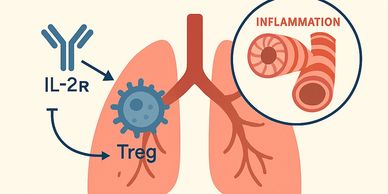
Severe asthma is characterized by chronic airway inflammation, largely driven by Type 2 helper T cells (Th2) and innate lymphoid cells (ILC2), which produce pro-inflammatory cytokines such as IL-4, IL-5, and IL-13. In healthy individuals, regulatory T cells (Tregs) maintain airway homeostasis by suppressing these Type 2 responses. However, in patients suffering from severe or steroid-resistant asthma, the number and function of Tregs are compromised, often due to a defect in IL-2 receptor signaling which prevents the subsequent activation of STAT5. As a result, Tregs are dysfunctional and unable to restrain Th2 inflammation, leading to persistent eosinophilic infiltration, mucus overproduction, and airway hyperreactivity. Using innovative protein-drug conjugates (PDCs), the TRegRx platform can restore proper STAT5 signaling and enhance Treg suppressive capacity. By re-establishing the integrity of the IL-2R pathway, TRegRx’s therapy enables Tregs to effectively suppress Th2 and ILC2-driven inflammation, reduce airway hyperresponsiveness, and promote long-term immune tolerance—all without broad immunosuppression or dependence on steroids.
Pipeline Overview
